

What Type of Damper is Best? Pros and Cons of Each Type
Relaxing beside your wood- or gas-burning fireplace, exploring the adventures of a Mark Twain novel, is a warm and cozy way to spend a chilly day in Hartford, CT. While your chimney is working to remove smoke and fumes, many homeowners don’t realize how vital the damper is to proper ventilation. Not only does it let the exhaust out of your home, but it also plays a starring role in your home’s energy efficiency. Given its importance, let’s dive into which type of damper is best for your chimney and the pros and cons of each.
Why Your Chimney Needs a Damper?
So, why does your chimney need a damper anyway? Think of a damper as the “door” for your firebox. Its primary function is to regulate airflow – letting smoke and fumes escape when burning logs and blocking outside air when you’re not using the fireplace. Without a functional damper, your chimney acts like an open front door, allowing warmer air inside your home to escape in winter and cool air to leak out in summer. In addition to energy savings, a damper:
- Prevents Downdrafts, such as gusty winds above your roof that blow cold air into your living room.
- Keeps Pests Out, like birds, squirrels, and raccoons, from building nests in the flue, which can obstruct the flue, creating a fire hazard and potential exposure to carbon monoxide fumes.
- Minimizes Moisture from rain and snow that can cause widespread damage to the interior masonry and rust metal components, like the damper.
Types of Fireplace Dampers
Most homes have one of two types of dampers:
Throat Dampers
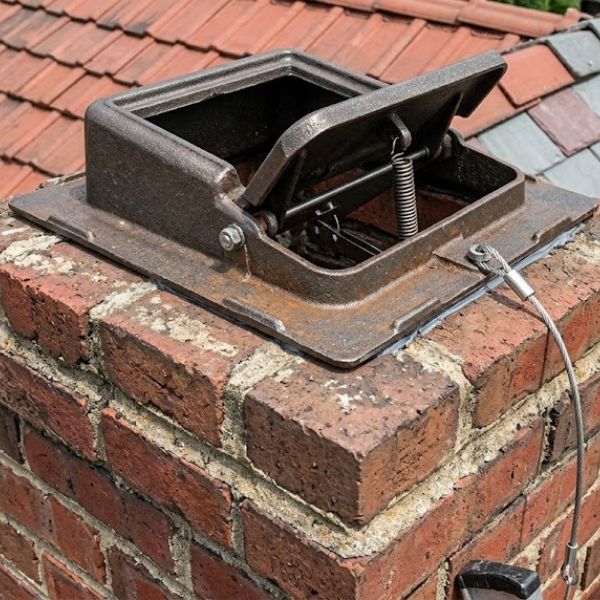
This is the conventional type that is common in most homes in Connecticut and Southern New England. It is positioned just above the firebox inside the chimney’s throat. They are usually made of cast iron or steel and are operated by a knob, lever, or handle.
Pros:
- Traditional and straightforward use.
- Lower initial costs.
Cons:
- Only seals the firebox, not the entire flue.
- Prone to rusting and warping.
- Requires frequent gasket replacement.
- Challenging to replace.
Top-Mount Dampers
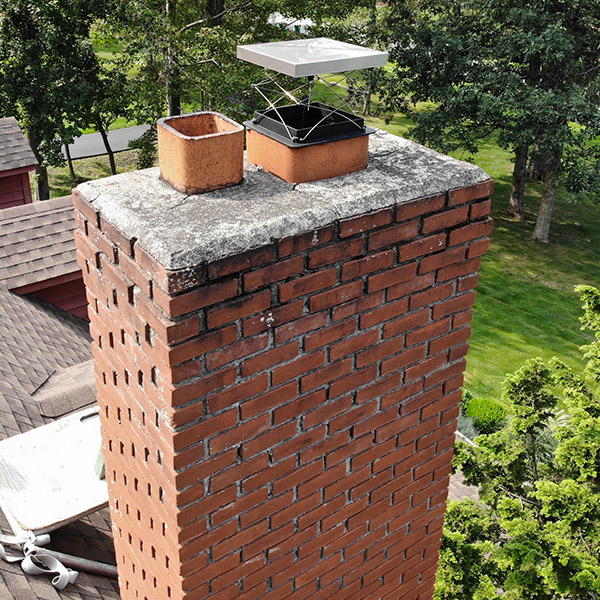
This newer type is installed at the very top of the chimney flue and includes an integrated chimney cap. They are easily operated using a spring-assisted chain mounted inside the fireplace.
Pros:
- Seals off the entire flue, not just the fireplace.
- Lower year-round energy costs.
- Includes a chimney cap to keep out rain, wildlife, and debris.
- Easier to repair and replace.
Cons:
- Higher initial cost.
- Requires access to the roof for installation and maintenance.
Which Damper Is Best
While throat dampers are standard in older homes, top-mount dampers are generally considered the superior choice for most fireplaces. They create an airtight seal, provide superior protection, are easy to operate, and offer lower energy costs that a throat damper simply cannot match.
5 Warning Signs Your Damper Needs Repair or Replacement
If you notice any of the following, it’s time to contact a professional chimney sweep:
- Difficulty Operating: The handle or lever is stuck, rusted, or requires extreme force to move.
- Draftiness: You feel a constant breeze coming from the fireplace even when it’s “closed.”
- Visible Rust: If you see flakes of rust in the firebox, the metal components are deteriorating.
- Oily or Flaky Deposits: Noticing sooty or creosote deposits on the damper is a severe fire hazard and requires immediate attention.
- Higher Energy Bills: A sudden spike in heating or cooling costs could mean your damper is not sealing properly, letting conditioned indoor air escape straight up the chimney.
 Let Northeastern Chimney Help Choose the Best Damper for Your Fireplace
Northeastern Chimney is the most trusted chimney and fireplace professional serving Central CT, including New Britain, Glastonbury, Manchester, West Hartford, and surrounding towns. If your damper is beyond repair, or you want to improve energy efficiency, we can help you choose the best damper for your hearth. We’re licensed and insured, and have over three decades of experience keeping homes comfortable and energy-efficient. Call us today to schedule an appointment with a hearth specialist.